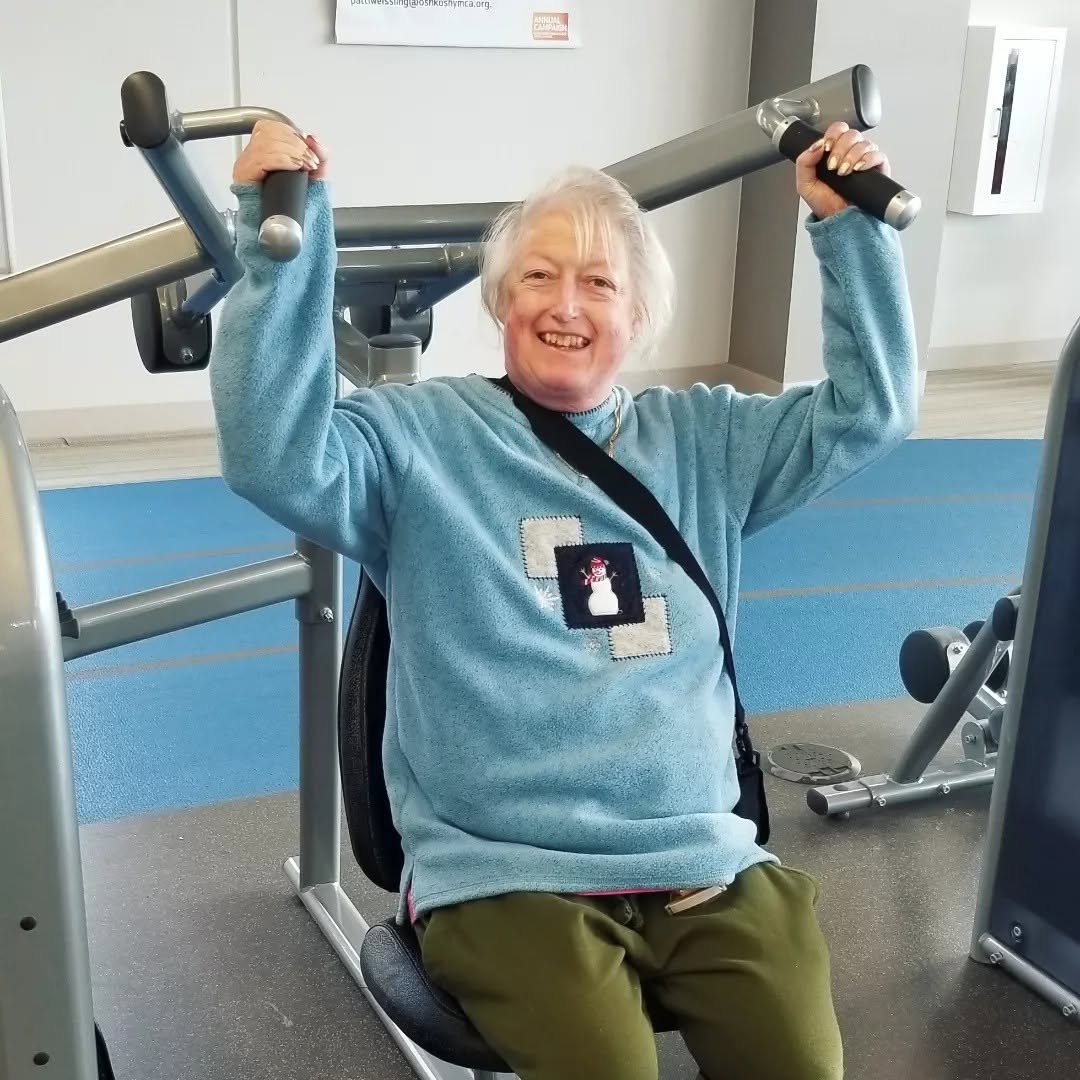
Wanda J. White Obituary-There is a unique kind of intimacy that comes with local radio. Before the era of endless podcasts and algorithm-driven music streams, the voices coming through our car dashboards and kitchen speakers were our closest companions. We woke up with them, commuted with them, and trusted them to guide us through the day’s news, weather, and shifting cultural tides. For decades across Wisconsin, one of those trusted, warm, and deeply familiar voices belonged to Wanda J. White.
If you are looking for the Wanda J. White obituary: Oshkosh native and former radio personality, you are also looking for the story of a woman who dedicated her life to connection. Known to tens of thousands of listeners by her on-air moniker, “Holly Michaels,” Wanda was much more than just a voice between songs. She was a storyteller, a community anchor, a legal and news commentator, a fierce sports enthusiast, and a friendly face who never met a stranger. She passed away peacefully at her home on June 13, 2026, surrounded by the love of her family. Her passing marks the end of an era for local broadcasting and leaves a massive void in the Oshkosh community she cherished so deeply.
But to simply state the dates of her birth and passing would be a disservice to a life lived so loudly and beautifully. Wanda’s journey from a bright-eyed high school student in Oshkosh to a widely recognized media personality—and eventually to a beloved fixture at the local YMCA—is a testament to the power of human connection. Let us dive deep into the life, the career, the mind, and the lasting legacy of a woman who always knew exactly what to say, exactly when we needed to hear it.
The Early Years: Growing Up in the Heart of Oshkosh
To understand the woman behind the microphone, you have to understand where she came from. Born on September 24, 1964, to William and Barbara Colburn White, Wanda was an Oshkosh native through and through. The 1960s and 1970s in Oshkosh, Wisconsin, provided a quintessential Midwestern upbringing. Nestled by the waters of Lake Winnebago and the Fox River, the community was tight-knit, industrious, and deeply grounded in traditional values.
Wanda grew up understanding the rhythm of this community. She attended Oshkosh North High School, walking the same halls as generations of locals, and graduated in 1983. Those who knew her in her younger years often recall her insatiable curiosity and her natural gift for gab. She wasn’t just someone who talked; she was someone who listened, observed, and reflected the energy of the room back to the people in it. This empathy and perceptiveness are the bedrock skills of any great broadcaster, though she might not have fully realized her career path at the time.
After high school, the natural next step for a bright, driven local was the University of Wisconsin-Oshkosh. Earning her bachelor’s degree there, she deepened her roots in the community while expanding her intellectual horizons. College is often where we find our voice, and for Wanda, that phrase would become quite literal. The communications, media, and sociological landscapes were shifting rapidly in the 1980s, and Wanda found herself fascinated by the power of mass media to inform, entertain, and unite people.
The Birth of “Holly Michaels”: A Wisconsin Broadcasting Legend
When Wanda stepped into the world of radio, she adopted the on-air name “Holly Michaels.” Why do radio DJs use stage names? Historically, it was about creating a persona—a slightly larger-than-life version of themselves that listeners could latch onto. But anyone who listened to Holly Michaels knew that she wasn’t playing a character. Holly was simply the amplified, polished, and professional extension of Wanda’s inherent warmth.
Mastering the Mic at WOSH, WYNE/WROE, and WPKR
Starting out in local radio is famously grueling. It requires working odd hours, managing complex audio boards, curating music logs, and maintaining an impossibly upbeat energy when you are running on three hours of sleep and bad station coffee. Wanda cut her teeth in the Oshkosh market, lending her talents to legacy stations like WOSH, WYNE/WROE, and WPKR.
At WOSH, a station with a deep history in the Fox Valley, she learned how to balance local news, community bulletins, and entertainment. Local radio isn’t just about playing the hits; it’s about knowing that Mrs. Smith’s lost dog was found, that the high school football team won their away game, and that a snowstorm is threatening the morning commute. Wanda mastered this delicate dance.
When she worked at WYNE/WROE and WPKR, she further honed her craft. Whether she was spinning adult contemporary tracks or introducing the latest country hits, her voice became a stabilizing force in the community. Listeners trusted her because she sounded like a friend. She didn’t talk down to her audience. Instead, she invited them into a conversation, making the isolating experience of a solo car ride feel like a lively gathering of friends.
Making Waves in Milwaukee at WMYX
Her talent eventually carried her beyond the city limits of Oshkosh to the much larger Milwaukee market, where she became a prominent voice on WMYX. Transitioning from a smaller market to a major metropolitan station is a massive leap for any broadcaster. The competition is fierce, the listener demographics are wider and more diverse, and the pressure to perform is immense.
Yet, the “Holly Michaels” magic translated perfectly. Milwaukee listeners quickly fell in love with her engaging personality. She proved that authenticity scales. You don’t have to change who you are to reach a broader audience; you just have to turn up the volume on your true self. Her time in Milwaukee solidified her status as a heavy hitter in Wisconsin radio, but her heart always remained tethered to her hometown.
The Broadcaster as a Legal Philosopher: Navigating Complex News
We often mistakenly categorize radio personalities as mere entertainers. But during morning drive-time shows and midday talk segments, hosts like Wanda are on the front lines of breaking news and cultural shifts. In the later years of her career, as the news cycle became increasingly dominated by complex, highly publicized legal battles, the role of the local broadcaster evolved. They had to become translators of legal philosophy, breaking down dense courtroom jargon into easily digestible concepts for the everyday listener.
Wanda didn’t shy away from the heavy stuff. When the world was turning upside down with unprecedented legal dramas, she used her platform to guide her listeners through the murky waters of modern justice, media ethics, and societal reckoning.
Analyzing the Harvey Weinstein Trial and the #MeToo Paradigm
Consider the seismic cultural shift brought about by the Harvey Weinstein trials. When the allegations against the powerful Hollywood producer first broke, it wasn’t just a celebrity scandal; it was a fundamental reckoning with power dynamics, workplace safety, and the philosophy of justice. For a broadcaster sitting behind a mic in Wisconsin, ignoring the biggest story in the world wasn’t an option.
Local radio hosts essentially had to educate the public on the fly. When discussing the Weinstein case, Wanda and her peers had to navigate the delicate legal philosophy of “prior bad acts” (Molineux evidence). Why is it notoriously difficult to prosecute historical sexual crimes? What is the statute of limitations, and why does it exist in the philosophy of law?
On air, these conversations aren’t just academic. They affect the listeners calling into the station. The Weinstein case sparked the #MeToo movement, which meant that thousands of ordinary women in places like Oshkosh and Milwaukee were suddenly finding the courage to share their own stories. A skilled broadcaster had to handle these calls with profound empathy while maintaining journalistic integrity regarding the presumption of innocence in a court of law.
Wanda had to explain to her audience the difference between the court of public opinion and the court of law. Weinstein’s eventual conviction in New York (and later in Los Angeles) relied heavily on the testimony of victims whose accounts lacked physical evidence but were corroborated by behavioral patterns. Explaining how witness credibility is established, and how the legal system attempts to balance the rights of the accused with the pursuit of justice for victims, requires a philosophical nuance that Wanda delivered flawlessly. She made her listeners understand that the Weinstein trial wasn’t just about one bad man; it was a stress test for the American legal system’s ability to adapt to systemic abuse.
Rudy Giuliani, Defamation Law, and the Battle for Truth
Another monumental legal philosophy that dominated the airwaves in recent years was the concept of defamation and the limits of free speech, highlighted most starkly by the legal downfall of Rudy Giuliani. For a talk radio personality, the First Amendment is sacred. It is the very foundation of their livelihood. But where does the line get drawn between protected political speech and actionable defamation?
As Giuliani faced massive lawsuits from election workers Ruby Freeman and Shaye Moss, broadcasters like Wanda had to unpack the intricate legal doctrine of “actual malice.” In the United States, defamation law is heavily influenced by the landmark Supreme Court case New York Times Co. v. Sullivan. To win a defamation suit as a public figure, you must prove that the speaker knew the statement was false or acted with reckless disregard for the truth.
Giuliani’s case was a masterclass in the consequences of ignoring this boundary. He ultimately surrendered his law license in certain jurisdictions and was ordered to pay a staggering $148 million in damages. For a radio host explaining this to a commuting audience, the discussion goes far beyond politics. It touches on the philosophy of truth in media.
What happens to a society when its leaders and lawyers abandon the concept of objective reality? How does the legal profession regulate itself when one of its most prominent members—once dubbed “America’s Mayor”—violates the ethical oaths of the bar? Wanda understood that her listeners needed to grasp the gravity of these events. She used her soothing, authoritative voice to explain that freedom of speech does not equate to freedom from consequences, especially when words cause tangible, devastating harm to innocent people’s lives.
Through these discussions, she elevated local radio from simple background noise to a vital public forum for democratic and legal education.
Life Beyond the Studio: The YMCA and the Power of Community
But Wanda’s life was not entirely consumed by the heavy news cycle or the flashing lights of the broadcast studio. When she eventually stepped away from the grueling schedule of full-time radio, she didn’t retreat into isolation. Someone with that much love for her community simply couldn’t stay away from the public. She found a new stage, albeit a quieter one, at the downtown Oshkosh YMCA.
Working as a desk receptionist might seem like a step down for a former media personality, but for Wanda, it was a continuation of her life’s work: connecting with people. The front desk of a community YMCA is the heartbeat of a town. It is where you see the exhausted parents dropping their kids off for swim lessons, the senior citizens coming in for water aerobics and socialization, and the teenagers looking for a safe place to play basketball after school.
Wanda was the smiling face that greeted them all. She knew their names, she asked about their families, and she brought the same professional warmth to scanning gym cards that she once brought to introducing the top 40 countdown. Community centers are vital sociological hubs. They are the “third places” in society—spaces outside of home and work where people gather, bond, and build civic trust. By becoming a fixture at the YMCA, Wanda continued to be an essential thread in the social fabric of Oshkosh.
A Fierce Love for Reba McEntire and Country Music Culture
You couldn’t walk past the YMCA front desk without learning two things about Wanda: she was incredibly kind, and she was an absolute, unapologetic fanatic for Reba McEntire.
Fandom is a beautiful aspect of the human experience. It gives us a shared language, a sense of belonging, and a source of pure, unadulterated joy. Wanda was often seen sporting her favorite Reba shirts at work. She didn’t just like Reba’s music; she deeply resonated with the storytelling, resilience, and fierce independence that Reba McEntire embodies in the country music world.
Think about the narratives in country music—stories of heartbreak, survival, family, and working-class pride. These were the very themes Wanda dealt with every day, both on the radio and in her personal interactions at the Y. She cherished every opportunity she had to meet the country music legend in person. For Wanda, meeting Reba wasn’t just a brush with fame; it was a validation of the soundtrack of her life. It is deeply comforting to know that in a world filled with complex legal battles and heavy news, Wanda could find absolute sanctuary in the twang of a guitar and the powerhouse vocals of a red-headed country queen.
Pickleball, Tennis, and the Joy of the Court
Wanda’s vibrant spirit wasn’t confined to sitting behind a desk or a microphone. She was fiercely active, finding immense joy and camaraderie on the courts. She was an avid player of tennis, racquetball, and, most notably, the rapidly growing sport of pickleball.
The rise of pickleball in America is actually a fascinating sociological phenomenon. It bridges generational gaps, requires immense strategic thinking without the brutal physical toll of traditional tennis, and most importantly, it is inherently social. The courts are smaller, the proximity to your opponent is closer, and the banter is a crucial part of the game. It is the perfect sport for a former radio host who loved to talk and connect.
Wanda was a regular on the local courts. She brought a competitive but joyful energy to her matches. Whether she was smashing a winning shot down the line or laughing off a missed volley, she made the game fun for everyone involved. Her presence on the courts will be deeply missed by her fellow players, who saw her not just as an opponent or a teammate, but as a crucial part of their daily routine.
Surviving Family, Memorial Services, and Final Goodbyes
Grief is a complex, non-linear process. When a community loses a public figure like Wanda, the mourning is both deeply personal and widely communal. People who never met her face-to-face but listened to her every morning feel a profound sense of loss, akin to losing a close friend.
Wanda is survived by a loving family who stood by her side until the very end. She leaves behind her devoted mother, Barbara; her brother, Kevin White, and his partner, Cindy Hayman. Her extended family includes her uncles Robert (Sali) Colburn, Michael (Carrie) Colburn, Patrick (Lori) Colburn, and Denny Dewing, as well as her aunts Lisa (Tagi) Shrakahalmaleske, Carol (John) Barlow, and Cheryl. The sheer size of her surviving family is a testament to the strong familial roots that kept her grounded in Wisconsin.
The family has extended heartfelt gratitude to the medical professionals and caretakers who assisted Wanda in her final days, particularly Dr. Duwell, Compassus Hospice, Rev. John Wills, Julie Smith, and her beloved colleagues at the YMCA.
For those wishing to pay their final respects, the memorial details have been set. A visitation will be held on June 30, 2026, starting at 11:00 AM at the Konrad-Behlman Funeral Home Eastside, located at 402 Waugoo Ave in Oshkosh, WI. The formal funeral service will commence at 1:00 PM. Following the service, Wanda will be laid to rest at Sacred Heart Cemetery in Oshkosh, returning permanently to the soil of the city she loved so much.
In keeping with her spirit of giving, the family has requested that in lieu of flowers, a memorial be established in Wanda’s name, ensuring that her legacy of kindness and community support continues long after her voice has left the airwaves.
Frequently Asked Questions About Wanda J. White
Who was Holly Michaels on the radio? “Holly Michaels” was the on-air pseudonym used by Wanda J. White during her extensive and highly successful radio broadcasting career. She used this name while working for several prominent Wisconsin radio stations, including WOSH, WYNE/WROE, WPKR in Oshkosh, and WMYX in Milwaukee. Her on-air persona was known for being warm, informative, and deeply connected to the local community.
What did Wanda J. White do after retiring from full-time radio? After stepping away from her demanding broadcasting career, Wanda continued to serve her community by working as a desk receptionist at the downtown YMCA in Oshkosh. In this role, she became a beloved local fixture, greeting members with a smile, talking about sports and music, and maintaining the strong interpersonal connections she valued throughout her life.
How did local radio hosts like Wanda handle complex national news? Radio hosts often serve as the bridge between dense national events and the local listener. During major cultural shifts and complex legal trials, hosts act as translators. They break down intricate legal philosophies—such as defamation, actual malice, and the statute of limitations—into accessible conversations, helping everyday citizens understand the broader societal impacts of these high-profile events.
What were Wanda J. White’s hobbies outside of work? Wanda was incredibly active and had a deep passion for sports and music. She was a massive fan of country music superstar Reba McEntire, often wearing Reba merchandise and cherishing the times she got to meet the singer. Athletically, Wanda loved spending time on the courts, playing tennis, racquetball, and pickleball with friends and community members.
Where and when are the funeral services for Wanda J. White being held? A visitation is scheduled for June 30, 2026, at 11:00 AM at the Konrad-Behlman Funeral Home Eastside (402 Waugoo Ave, Oshkosh, WI). The funeral service will follow at 1:00 PM at the same location. Burial will subsequently take place at Sacred Heart Cemetery in Oshkosh.
How can I honor the memory of Wanda J. White? The family has established a memorial fund in Wanda’s name. In lieu of sending flowers, they encourage those who loved her to contribute to this memorial, allowing her spirit of generosity and community love to endure. Additionally, fans and friends are encouraged to plant a tree in her memory or simply perform an act of kindness in their local community—something Wanda did every single day.