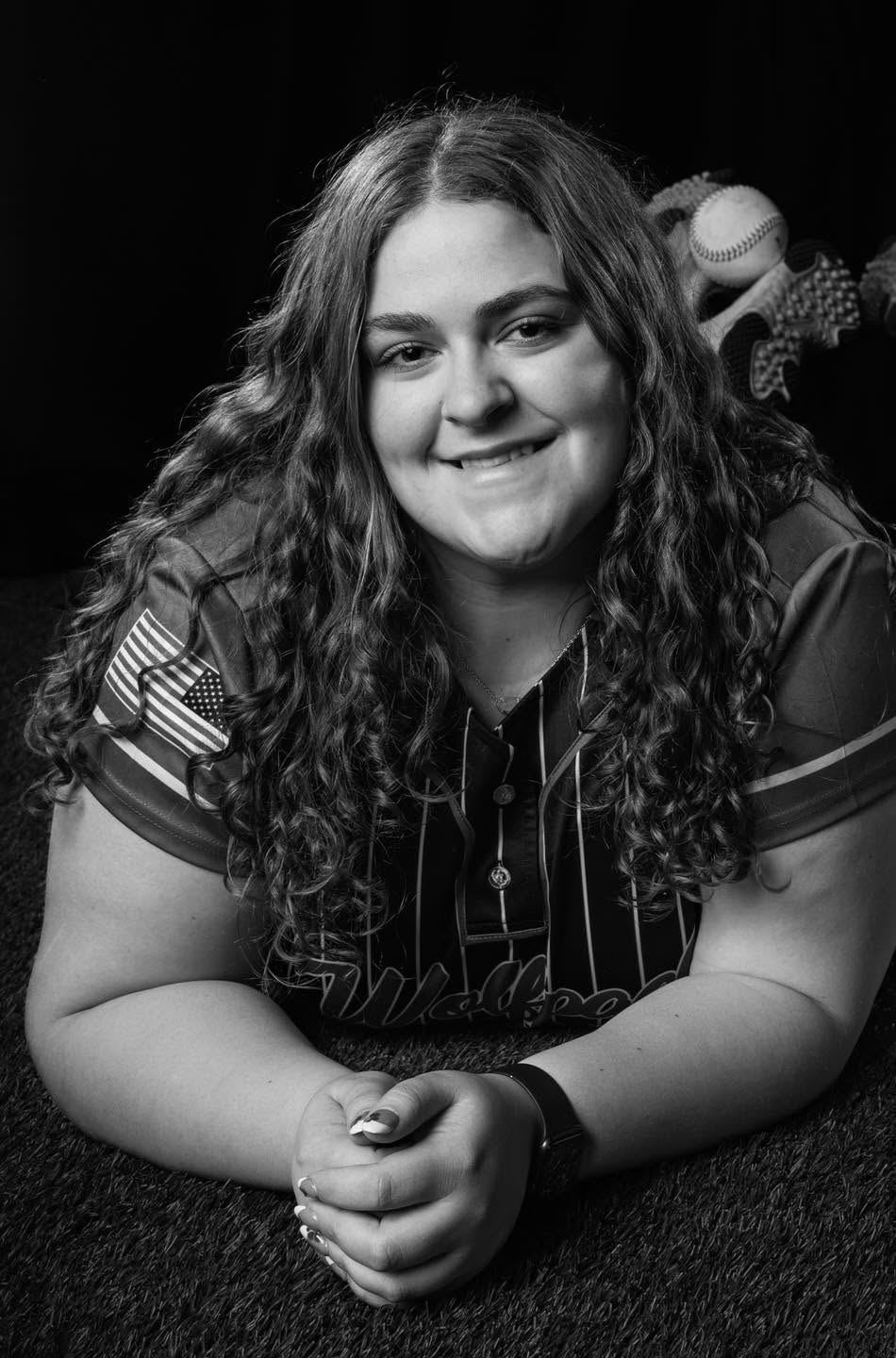
The Fort Wayne softball community is currently navigating an unimaginable heartbreak. When news broke regarding the Febie Booher obituary, the Fort Wayne Wolfpack softball organization, the Prairie Heights Panthers, and the entire Indiana athletic community were brought to a sudden, devastating standstill. Febie Booher was not just a player on a roster. She was the energetic pulse of the dugout, a fiercely competitive athlete, a gifted visual storyteller, and a cherished friend whose sudden passing has left a profound void in the lives of everyone she touched.
Losing a young athlete is one of the most difficult experiences a community can endure. The sheer outpouring of love, digital tributes, and emotional vigils speaks volumes about who Febie was. But exploring a life lost so soon also forces us to look deeply at how we remember people in the modern age. How does a community capture the essence of a teammate? How does digital media presence shape our grieving process? And when we look at the broader landscape of legacy, public reputation, and legal philosophy, how do the pure, untainted memories of a local hero contrast with the dark, complicated media downfalls of high-profile public figures?
This comprehensive tribute and analysis will not only honor the incredible life, athletic achievements, and artistic contributions of Febie Booher, but it will also delve into the broader implications of media presence, community impact, and the complex legal and social frameworks that define human legacies today.
Introduction: A Heartbreaking Loss in the Fort Wayne Community
When you walk past a local softball field in Fort Wayne, Indiana, you hear the familiar symphony of the sport. You hear the crisp ping of aluminum bats, the rhythmic chant of players from the dugout, the crunch of cleats on red dirt, and the encouraging shouts of coaches. For years, Febie Booher was an integral part of that symphony. The tragic news of her passing has fundamentally altered the atmosphere of the Fort Wayne Wolfpack organization.
Grief has a way of rippling outward. It starts with the immediate family, strikes the teammates who shared the field with her, hits the coaches who mentored her, and eventually washes over the entire regional sports community. When the Fort Wayne Wolfpack officially announced the heartbreaking loss, social media feeds instantly filled with shared memories, photographs, and tearful condolences. It became immediately apparent that Febie was much more than a talented infielder or a dependable batter. She was a unifying force.
In the wake of this tragedy, the community is not just mourning the loss of a player; they are mourning the loss of a future. They are grieving the potential of a young woman who had already shown an incredible capacity for kindness, resilience, and creativity. As teammates gather to lean on one another, the reality of the situation remains difficult to process. The locker room is quieter. The dugout feels overwhelmingly empty. Yet, through the collective sorrow, a powerful narrative of love and remembrance is taking shape, ensuring that her name will forever be etched into the history of Indiana softball.
Who Was Febie Booher? The Heartbeat of the Diamond
To truly understand the weight of the Febie Booher obituary, you have to understand the person behind the jersey. Febie was a rare kind of athlete. In youth and high school sports, you often find players who are immensely talented but quietly reserved, or players who are boisterously vocal but perhaps lack the fundamental skills to back it up. Febie possessed the perfect amalgamation of both traits. She had the raw talent to change the outcome of a game, and the infectious, magnetic personality to change the mood of an entire team.
Friends and family describe her as a compassionate, uplifting, and fiercely loyal individual. If a teammate struck out at a crucial moment, Febie was the first person waiting at the steps of the dugout with a high-five and a word of encouragement. If the team was dragging during a sweltering summer practice, she was the one cracking a joke to lighten the mood. Her enthusiasm was not manufactured; it was an authentic byproduct of her deep love for the game and the people she played it with.
Off the field, she was known for her warmth. She had an incredible ability to make new players feel welcome and valued. In an era where teenagers are often consumed by cliques and social hierarchies, Febie transcended those barriers. She recognized that a team is only as strong as its most vulnerable player, and she made it her personal mission to ensure that everyone in the Wolfpack organization felt seen and appreciated. Her heart was as big as her swing, and her legacy of kindness will long outlast the sting of her untimely departure.
A Legacy Built on the Field: Fort Wayne Wolfpack and Prairie Heights
When discussing Febie’s athletic career, you have to look at the sheer grit and determination she displayed every time she laced up her cleats. As a proud member of the Fort Wayne Wolfpack and the Prairie Heights High School Panthers in LaGrange, Indiana, she cultivated a reputation as a relentless competitor.
For the Fort Wayne Wolfpack, travel softball is a grueling commitment. It involves endless weekend tournaments, long drives across state lines, early morning wake-up calls, and the physical toll of playing multiple games in a single day. Febie thrived in this environment. She embraced the grind because she loved the process of improving. Coaches frequently highlighted her teachability, her willingness to put in extra hours in the batting cages, and her high softball IQ. She understood the intricacies of the sport—when to hit behind the runner, how to read a pitcher’s release point, and the importance of defensive positioning.
Analyzing the Stats: The May 2026 Resurgence
Her impact on the Prairie Heights Panthers during the 2026 season was nothing short of spectacular. If we look closely at the late May stretch run, Febie’s bat was incredibly hot, helping propel her team to crucial victories.
Take the nail-biting game against Fremont in late May 2026. The Panthers were locked in a tense battle, and the pressure was palpable. Prairie Heights ultimately secured a 5-3 victory, and Febie was the offensive engine that drove them there. She stepped into the batter’s box with total confidence, going 2-for-3 at the plate. She delivered a crucial double and racked up two vital RBIs, proving her ability to perform in clutch situations. Alongside her teammate Addison Taylor, Febie ran wild on the base paths, demonstrating her speed and situational awareness.
That win bumped Prairie Heights’ record to a formidable 14-8 and set the stage for an intense weekend matchup against the powerful Fort Wayne Bishop Luers Knights. In every inning she played, Febie left every ounce of her energy on the dirt. She was the kind of player opposing coaches had to specifically game-plan against. Her swing mechanics were smooth, her eye for the strike zone was disciplined, and her defensive transitions were seamless.
Retiring Jersey Number 21
In sports, a jersey number is heavily symbolic. It becomes an extension of the player’s identity. For the Fort Wayne Wolfpack, the number 21 will forever belong to Febie Booher. Following her passing, the organization made the deeply emotional decision to retire her jersey.
Retiring a number is the ultimate sign of respect in athletics. It ensures that decades from now, when a new generation of young girls joins the Wolfpack, they will look up and see the number 21. They will ask who wore it, and they will be told the story of a girl who played with unmatched passion, loved her teammates fiercely, and left a permanent mark on the program. Number 21 is no longer just digits printed on a synthetic fabric; it is a monument to Febie’s spirit.
The Lens of a Friend: Febie’s Impact as a Team Photographer
While Febie’s physical presence on the field was formidable, she also possessed a remarkable artistic vision that allowed her to view the game from a completely different perspective. Febie was a highly talented photographer. Through her camera lens, she captured the raw, unfiltered emotions of her teammates, coaches, and the sport itself.
The Technical and Emotional Power of Sports Photography
Sports photography is an incredibly difficult medium to master. It requires anticipation, perfect timing, an understanding of light, and an intimate knowledge of the game. You have to know exactly when the shortstop is going to dive for a ground ball, or when the batter is going to make explosive contact. Because Febie knew the game of softball inside and out, she possessed an innate ability to predict these moments before they happened.
But more importantly, she knew how to capture the emotion between the plays. Her photography portfolio wasn’t just filled with standard action shots; it was populated with candid moments of joy. She photographed the tight embraces after a walk-off win, the focused determination in a pitcher’s eyes before a crucial pitch, and the chaotic, beautiful laughter inside the dugout.
By taking on the role of team photographer, Febie became the unofficial historian of the Fort Wayne Wolfpack. She provided her teammates with tangible memories they will cherish for the rest of their lives. In the wake of her passing, these photographs have taken on an immeasurable new weight. The community is now looking back at the images she created, finding comfort in the fact that she saw them so clearly and beautifully. Her artistic eye and love for storytelling connected people in a deeply unique way, leaving behind a visual legacy that perfectly complements her athletic one.
Community Impact: The Psychology of Collective Grief in Sports
When the news of the Febie Booher obituary spread, the psychological impact on the local sports community was immediate and profound. Sports teams operate like highly functioning secondary families. You bleed together, you sweat together, and you experience the highest highs and the lowest lows together. When a link in that chain is suddenly broken, the psychological shock is staggering.
How Teams Navigate the Loss of a Star Player
From a sports psychology perspective, collective grieving within a team is a highly complex process. Athletes are traditionally trained to compartmentalize their emotions. They are taught to “shake it off,” push through the pain, and focus entirely on the next play. However, the tragic loss of a beloved teammate shatters that protective armor. You cannot simply shake off profound grief.
Coaches and sports psychologists often have to pivot entirely from focusing on athletic performance to focusing on mental health and emotional survival. The Fort Wayne community immediately recognized this need. Vigils were organized, counseling resources were made available, and the softball diamond was transformed from a place of intense competition into a sanctuary for mourning.
The dugout, normally a place of high-energy chatter, becomes a sacred space. Players leave flowers, written notes, and cherished mementos at her locker or her position on the field. This physical manifestation of grief is essential for the healing process. It allows the community to externalize their pain and process the reality of the loss together. Through this shared trauma, the bonds between the remaining teammates often become unbreakable. They begin playing not just for a championship, but for her memory.
Media Presence and the Evolution of Modern Grieving
The way the Fort Wayne community is mourning Febie also highlights a massive shift in how society processes death today. We are living in a hyper-connected, digital era where media presence dictates the narrative of our lives and, ultimately, our deaths.
Digital Memorials and the Shift in Public Mourning
In the past, an obituary was a short, printed column in a local newspaper. Today, grieving happens in real-time across digital landscapes. Platforms like ForeverMissed have revolutionized the way we memorialize our loved ones. The online memorial created for Febie Booher instantly became a centralized hub for love, where friends from different states, rival teams, and distant relatives could come together to share stories and post their favorite photographs.
This digital media presence ensures that her legacy is actively preserved and easily accessible. A digital obituary doesn’t fade or end up in a recycling bin; it lives indefinitely in the cloud. It allows the community to build a living, breathing archive of a person’s impact. The sheer volume of comments, shared posts on Facebook and Instagram, and digital candles lit in her honor demonstrate the immense reach of modern grief.
However, this intersection of digital memory, media presence, and legacy preservation brings up fascinating and complex questions about how we define reputations in the public sphere. When a local community rallies around a fallen star, the media presence is pure, loving, and protective. But how does this protective legal and social framework contrast with the way the media machine treats public figures? To truly appreciate the sanctity of a community-driven legacy, we must take a deep dive into the legal philosophy of reputation and contrast it with high-profile media spectacles.
Deep Dive: Legal Philosophy, Media Trials, and Legacy Preservation
Why do we care so much about how a person is remembered? From a legal and philosophical standpoint, the concept of a person’s legacy is deeply tied to their fundamental rights, their reputation, and their societal value. When someone passes away, the legal system and society at large face the task of managing the narrative left behind.
The Legal Framework of Post-Mortem Privacy and Reputation
In legal philosophy, there is an ongoing debate about post-mortem rights. Does a person still have a right to privacy and reputation after they die? In many jurisdictions, defamation laws do not protect the deceased. Once a person passes, you generally cannot sue for slander or libel on their behalf. This means that a person’s legacy is left entirely in the hands of the public, the media, and their community.
For a cherished figure like Febie Booher, this isn’t a problem. Her community acts as the absolute guardian of her reputation. The digital footprint she left behind—her incredible softball stats, her beautiful photography, her uplifting social media posts—serves as an impenetrable shield of positivity. Her legacy is defined by the truth of her kindness.
Public Figures vs. Private Legacies: A Legal Perspective
The legal philosophy surrounding media presence sharply divides private citizens from public figures. For a private citizen, the media’s role is usually localized and respectful, stepping in only to amplify the family’s grief or report on a community vigil. The threshold for what the media can ethically and legally publish is strict, grounded in respect for the grieving family.
However, when a person thrusts themselves into the public arena, they forfeit many of these protections. The law dictates that public figures must endure a much higher level of scrutiny. To prove defamation, a public figure must demonstrate “actual malice”—meaning the media published false information knowing it was false, or with reckless disregard for the truth. This legal standard fundamentally changes how legacies are built, defended, and, in some cases, utterly dismantled.
Contrasting Legacies: Notable Cases of Media Presence and Downfall
To fully grasp the beauty, purity, and profound localized impact of Febie Booher’s legacy, it is intellectually valuable to contrast it with the opposite end of the spectrum. What happens when a legacy is not protected by love, but is instead ripped apart by legal failures, ethical breaches, and an unforgiving media presence?
If we look at some of the most notable legal and media cases of the modern era—such as the downfalls of Harvey Weinstein and Rudy Giuliani—we see exactly how legal philosophy and media presence can systematically dismantle a reputation.
The Harvey Weinstein Case: Media Accountability and the Destruction of Legacy
For decades, Harvey Weinstein was viewed as an untouchable titan of the entertainment industry. His legacy seemed permanently secured in the annals of cinema history. He had money, power, and a meticulously crafted public media presence.
However, his legacy was built on fear, coercion, and severe legal and moral violations. When investigative journalism finally pierced his protective bubble, the media presence that once glorified him turned into the very engine of his destruction. From a legal philosophy standpoint, the Weinstein case revolutionized the concept of “silence.” For years, non-disclosure agreements (NDAs) were used as legal weapons to suppress truth and maintain a false legacy.
When the truth emerged, the media trial was swift and brutal, followed by a literal criminal trial that resulted in a massive prison sentence. Weinstein’s legacy is permanently destroyed. He will not be remembered for the Oscars his company won; he will be remembered as a predator whose actions catalyzed a global movement for justice. This is the dark side of legacy—when a reputation is built on falsehoods, the modern media ecosystem, coupled with a shifting legal landscape, will eventually tear it down to the studs.
Rudy Giuliani: Legal Philosophy and the Erosion of Public Trust
Another stark contrast can be found in the legal and public trajectory of Rudy Giuliani. Following the tragic events of September 11, 2001, Giuliani was dubbed “America’s Mayor.” His legacy seemed bulletproof, rooted in his steady leadership during a time of national crisis. He commanded deep respect and had an incredibly favorable media presence.
Yet, over the last several years, Giuliani’s involvement in election controversies, defamation lawsuits, and massive legal judgments has fundamentally altered his historical standing. Philosophically, Giuliani’s downfall raises a fascinating question: Can a lifetime of public service be completely erased by a few years of severe legal and ethical missteps?
Giuliani faced a monumental defamation lawsuit from election workers he falsely accused of fraud. The courts handed down a staggering financial judgment against him. In this case, the legal system didn’t just punish him financially; it permanently altered his media presence. The public trust was eroded. His legacy went from a beacon of steady leadership to a cautionary tale about the dangers of unchecked rhetoric, legal hubris, and spreading misinformation.
What These Cases Teach Us About True Legacy and Media Ethics
Why discuss Weinstein and Giuliani in the context of a local softball player’s passing? Because the contrast highlights the very essence of what a true legacy is.
Weinstein and Giuliani spent millions of dollars, utilized massive legal teams, and manipulated global media networks to build and defend their legacies—and yet, their reputations crumbled because the foundation was deeply flawed. Their legacies became cautionary tales of legal philosophy, media scrutiny, and moral failure.
Febie Booher, on the other hand, didn’t have a PR team. She didn’t have high-priced lawyers managing her image. She was a high school athlete and a photographer from Indiana. Yet, her legacy is infinitely stronger, purer, and more enduring than either of those powerful men. Her legacy was built on the undeniable truth of how she treated the people around her. It was built in the dirt of the batter’s box, through the lens of her camera, and in the quiet moments of friendship in the dugout.
The media presence surrounding Febie is characterized entirely by authentic love. It proves that at the end of the day, legal protections and media manipulation are completely powerless compared to the genuine, positive impact a person has on their immediate community. You don’t need to be a global public figure to leave a permanent mark on the world. You just have to be a good person, a dedicated teammate, and a loving friend. Febie was all of those things and more.
Moving Forward: How the Fort Wayne Wolfpack Will Honor Her
As the days turn into weeks, and the initial shock of the Febie Booher obituary begins to transition into long-term grief, the Fort Wayne Wolfpack and the Prairie Heights Panthers face the daunting task of moving forward. How do you play the next game when the space at shortstop or second base feels overwhelmingly empty?
The answer lies in dedication. The coaching staff and the community are already planning extensive ways to ensure that Febie’s presence is felt at every single game moving forward. Aside from the retirement of jersey number 21, teams often employ powerful symbolic gestures to keep a lost player’s spirit alive.
We will likely see players writing her number on their wrists or carving her initials into the dirt before taking their stance in the batter’s box. The team might hang her jersey in the dugout during every travel tournament, a silent reminder that she is still traveling with them, still cheering them on, and still expecting them to give maximum effort on every single pitch.
Furthermore, her photography will play a massive role in the healing process. Her images will be printed, framed, and shared at banquets and memorial events. The team might even create an annual award in her name—the “Febie Booher Spirit Award”—given to the player who best exemplifies her relentless work ethic, unyielding kindness, and creative passion.
Grief is not a process that eventually ends; it is a weight that you simply learn to carry. The Fort Wayne softball community will carry the weight of Febie’s loss for a very long time, but they will also carry the immense light of her memory. Every time a batter hits a crucial double, every time a pitcher escapes a bases-loaded jam, and every time a photographer captures a perfect, joyful moment in the dugout, Febie will be right there with them.
Frequently Asked Questions (FAQs)
Who was Febie Booher? Febie Booher was a deeply cherished high school athlete, talented team photographer, and beloved community member from Indiana. She was a prominent softball player for the Fort Wayne Wolfpack travel organization and the Prairie Heights High School Panthers.
What position did Febie Booher play? She was known as a versatile, highly competitive player who was vital to both her high school and travel teams, heavily praised for her situational hitting, base-running speed, and defensive reliability.
Why is jersey number 21 significant? Number 21 was Febie’s jersey number. Following her tragic passing, the Fort Wayne Wolfpack organization announced that the number would be officially retired to honor her lasting impact on the program and her teammates.
How did Febie contribute off the softball field? Beyond her athletic talents, Febie was an exceptionally gifted photographer. She documented her team’s journey through her camera lens, capturing both the intense action on the field and the beautiful, candid moments of friendship in the dugout.
How is the Fort Wayne community memorializing her? The community is rallying around her family and teammates through digital tributes, online memorial pages (such as ForeverMissed), vigils, and an outpouring of supportive social media presence. The team is carrying forward her legacy by dedicating their season to her memory.
How does media presence impact public grieving? In the modern digital age, grieving has moved into the public sphere through digital memorials and social networks. This allows for a wider net of support and ensures that a person’s positive legacy is documented and archived permanently, providing immense comfort to the surviving family and friends.
Final Thoughts on a Life Well-Lived
The story of the Febie Booher obituary is a story of profound tragedy, but it is equally a story of beautiful, radiant life. When we step back and view the totality of her impact, we are reminded of the fragility of our existence and the absolute importance of treating each other with compassion.
While legal philosophy debates the rights of the dead, and the global media obsesses over the scandalous downfalls of high-profile public figures, the real, true essence of human legacy is quietly being built on local softball diamonds and high school hallways. Febie didn’t need actual malice laws, PR firms, or legal frameworks to secure her reputation. She secured it with every smile she offered, every photograph she snapped, and every swing of her bat.
To the Fort Wayne Wolfpack, the Prairie Heights Panthers, and the Booher family, the wider community stands with you. The loss of such a vibrant, multi-talented young woman is a heavy burden, but the joy she brought into the world is completely indestructible. Let her life be a continuing reminder to all of us: play hard, love deeply, capture the beautiful moments, and always be the teammate waiting with a high-five when someone else needs it most.
Febie Booher’s physical time on the diamond may have ended far too soon, but her legacy will echo through the Fort Wayne softball community for generations to come. Rest in peace, Number 21.