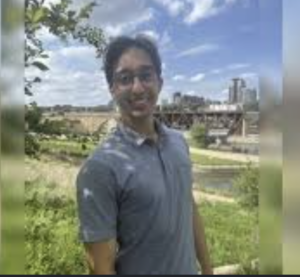
Raja Chinnakotla Obituary and a Life of Impact-When a community loses a young, vibrant visionary, the shockwaves resonate far beyond the immediate circles of family and friends. The recent announcement of the Raja Chinnakotla obituary has left the Edina, Minnesota, community—and his expansive network at the University of Wisconsin-Madison—in a state of profound mourning. Raja Anton Chinnakotla, who departed this life on June 14, 2026, at the tender age of 20, was not just a student; he was a natural advocate, an academic powerhouse, and a deeply compassionate soul who possessed the rare ability to make strangers feel like family.
In today’s fast-paced digital landscape, an obituary often serves as a brief summary of birth, death, and surviving relatives. But to truly honor a life as multifaceted and impactful as Raja’s, we must look deeper. We must explore the passions that drove him, the historical and economic issues he sought to solve, and the profound way he interacted with the world. From his insightful TEDx talk on the struggles of rural America to his rigorous academic pursuits in post-colonial economic history, Raja moved through life with the unshakeable conviction that he could change the world for the better. He didn’t just want to participate in society; he wanted to understand its underlying frameworks—its policies, its histories, and its legal philosophies—so he could advocate for those living on the margins.
This comprehensive tribute serves as both a reflection on the Raja Chinnakotla obituary and a deep-dive exploration of the global, economic, and societal themes he cared about so deeply. By examining his life, we uncover a powerful blueprint for empathy, intellectual curiosity, and grassroots community impact.
Who Was Raja Anton Chinnakotla? A Life Defined by Connection
Born on January 31, 2006, Raja Anton Chinnakotla lived a life defined by boundless connection, intellectual adventure, and an infectious warmth that naturally drew people toward him. While twenty years is far too short a time to spend on this earth, the sheer density of Raja’s experiences and relationships makes his story feel vast.
To know Raja was to be instantly disarmed by his kindness. He possessed the incredibly rare gift of looking completely past surface-level attributes and peering directly into the heart of every person he encountered. In a society that is often highly critical and bitterly divided, Raja was a steadfast champion of the newcomer. Whether you were a freshman navigating the intimidating hallways of a new school, or someone struggling to find a voice in a crowded room, Raja was there. He made it his personal mission to ensure that no one ever felt invisible.
As news of his passing circulated, heartfelt tributes began pouring in across legacy pages and community forums. Colleagues, former classmates, and college friends recalled his ability to offer encouragement with a sincerity that is rarely seen today. He wasn’t just casually polite; he was deeply, genuinely invested in the well-being of others.
Early Roots in Edina: Family, Passions, and a Grounded Spirit
Growing up in Edina, Minnesota, Raja developed a deeply grounded spirit that kept him humble despite his extraordinary talents. His family was the cornerstone of his existence. His love for his mother, Ann; his father, Srinath; and his sister, Adelle, was unparalleled. He treated his family members not just with the standard respect of a son and brother, but with the unwavering devotion of a best friend.
Despite his towering academic achievements, Raja found the most profound joy in life’s simple pleasures. He was incredibly down to earth. On a typical weekend, you wouldn’t necessarily find him chasing the spotlight; instead, you’d find him exploring local farmers’ markets with his mother, meticulously picking out fresh produce. He was an avid culinary enthusiast who appreciated the nuances of fine dining, always eager to try new flavors and cultural cuisines.
Furthermore, Raja was a dedicated animal lover. For him, animals were part of the family ecosystem. He found great comfort and companionship in the family’s pug, Osso (who preceded him in death), and their cat, Jelly. Over the years, his home was also filled with various hamsters and fish, reflecting a gentle soul who loved to nurture and care for all living things.
High School Advocacy and the Edina Asian American Alliance
Raja’s high school years at Edina High School were a masterclass in civic engagement and cultural advocacy. He didn’t just attend classes; he actively shaped the culture of his school. He was heavily involved in Concert Band, Worldquest, and the Speech team, where he honed his ability to articulate complex global issues with clarity and persuasion.
However, his most enduring impact during his high school years may have been his leadership within the Edina Asian American Alliance (EAAA). As a member of the EAAA Leadership Committee, Raja was instrumental in planning large-scale cultural events that fostered inclusivity. He served on the AAPI Month Committee, where he helped prepare extensive programming to celebrate Asian American and Pacific Islander Heritage Month. He was also a crucial part of the Diwali Committee, working in partnership with the South Asian Society and the AAPI Student Union to organize a massive celebration of the Festival of Light.
His work here wasn’t just about throwing events; it was about public policy at the micro-level. He was helping to craft a school environment where diversity was not merely tolerated, but enthusiastically celebrated. He wanted marginalized students to see themselves reflected in the curriculum and the community. This grassroots advocacy laid the foundation for his later academic pursuits.
Detailed Case Study: The TEDx Talk and the Rural American Crisis
One of the crowning achievements of Raja’s youth—and a perfect encapsulation of his intellectual depth—was his October 2023 presentation at TEDxEdina Youth. The title of his talk was both provocative and deeply empathetic: “What’s the problem with rural America?”
For a high school student from an affluent suburb of Minneapolis to tackle the socio-economic decline of rural America is highly unusual, but Raja was an unusual thinker. He didn’t approach the topic from a place of academic detachment; he approached it through lived experience and historical context.
Contrasting Vizianagaram, India, and Sargent, Nebraska
During the summer before his senior year, Raja took time to travel and observe. He visited relatives in Vizianagaram, a city in the Indian state of Andhra Pradesh, and he also spent time in Sargent, Nebraska, a tiny, remote city with a population of barely 500 people.
In this TEDx case study, Raja drew a brilliant, unexpected parallel between these two vastly different geographic locations. He observed that despite being separated by oceans, cultures, and economic systems, both small towns suffered from similar systemic issues: the drain of youth moving to urban centers, the struggle to maintain local infrastructure, and a creeping sense of being left behind by modernized, globalized public policy.
The Economic Philosophy Behind Small-Town Revitalization
Raja used these observations to formulate a sophisticated economic philosophy. He argued that the political and cultural divides currently tearing apart modern nations are heavily rooted in geographic inequality. When rural areas are stripped of their resources and their voices, resentment builds. Through his speech, he hoped to spread a message of greater understanding toward people with different perspectives. He wanted his audience to realize that the farmer in Nebraska and the worker in Vizianagaram are both subject to the same unforgiving macroeconomic forces.
This level of detailed case study analysis is exactly why Raja was so respected. He didn’t rely on talking points; he relied on data, human interaction, and profound empathy.
Academic Pursuits at UW-Madison: Data Science, Economics, and History
Following his graduation from Edina High School, Raja took his brilliant mind to the University of Wisconsin-Madison. Here, his academic appetite proved to be insatiable. He pursued an undergraduate degree in Economics while simultaneously securing certificates in Data Science, History, Mathematics, and South Asian Studies.
To say this course load is rigorous is an understatement. It represents a highly intentional blending of quantitative analysis (Math, Data Science) with qualitative human experience (History, South Asian Studies). Raja understood that data without historical context is blind, and history without data is easily manipulated.
Analyzing Post-Colonial South Asian Economic History
At the Center for South Asia at UW-Madison, Raja focused his academic interests on economic history, particularly in post-colonial South Asia. He studied how the lingering effects of British colonial policy continued to shape the economic realities, trade infrastructures, and legal frameworks of modern India and its neighboring countries.
He didn’t just absorb this information; he shared it. He worked as a peer mentor, guiding other students through complex course materials. He wanted to ensure that the next generation of public policy and economics students understood the vital importance of historical context when drafting modern solutions. His academic trajectory was pointing him straight toward a career where he could influence global economic policy to benefit those who had been historically disenfranchised.
Comprehensive Legal Analysis: Public Policy vs. High-Profile Media Sensationalism
To fully appreciate the type of systemic change Raja was interested in, it is highly instructive to contrast his philosophy of public policy with the narratives that dominate our current cultural landscape. We live in an era where the public’s understanding of “justice” and “policy” is heavily skewed by relentless media presence. Instead of focusing on rural economic decay or post-colonial restitution, our news feeds are oversaturated with the spectacles of high-profile litigation.
When analyzing modern societal structures, scholars of economics and history—like Raja—must grapple with how legal philosophy operates in the real world versus how it is portrayed on television.
Legal Philosophy in the Modern Era: Restorative vs. Punitive Justice
The legal philosophy that underpins most public policy is fundamentally about the distribution of resources and the protection of vulnerable communities. This is restorative justice—the quiet, unglamorous work of ensuring a town in Nebraska has funding for a hospital, or ensuring an immigrant family in Edina has access to fair housing.
However, the modern media landscape ignores restorative justice in favor of punitive legal spectacles. The public’s perception of the law is increasingly shaped by celebrity defenses, highly publicized criminal trials, and the theatrical nature of the courtroom.
Notable Cases and Institutional Trust: Harvey Weinstein and the Shift in NDA Legislation
Consider one of the most notable cases of the 21st century: the prosecution of Harvey Weinstein. This case completely dominated global media presence and served as the catalyst for the #MeToo movement. From a legal philosophy standpoint, the Weinstein case was a massive stress test for the American judicial system. It forced a global reckoning regarding the use of Non-Disclosure Agreements (NDAs), the statute of limitations on sexual assault, and the complicity of corporate boards.
While the media focused heavily on the sensational details and the aggressive tactics of Weinstein’s high-profile defense attorneys (a common feature in celebrity law), the actual public policy implications were what mattered to legal scholars. The Weinstein case exposed how existing legal frameworks historically protected the powerful at the expense of the marginalized. It took immense public pressure to break those structures down. For a student of history and economics, the Weinstein case is a prime example of institutional failure that requires sweeping policy reform to correct.
Rudy Giuliani, RICO Statutes, and the Ethical Obligations of Leadership
Similarly, the legal saga of Rudy Giuliani provides a fascinating case study in the evolution of legal philosophy and media presence. Once heralded as “America’s Mayor” and known for his pioneering use of the Racketeer Influenced and Corrupt Organizations (RICO) Act to dismantle organized crime in New York, Giuliani’s subsequent legal controversies have dominated headlines.
Giuliani eventually found himself facing RICO charges in Georgia related to election interference, alongside a barrage of defamation lawsuits and the suspension of his law license. From a public policy perspective, the Giuliani narrative forces scholars to ask difficult questions about the ethical obligations of attorneys, the fragility of democratic institutions, and the danger of political tribalism. When legal figures become larger-than-life media personalities, the foundational principles of the justice system are often overshadowed by political theater.
Why Grassroots Advocacy Outweighs Media Spectacles
Why discuss Harvey Weinstein and Rudy Giuliani in an article honoring Raja Chinnakotla? Because the contrast highlights the purity and vital importance of Raja’s mission.
The media presence of cases like Weinstein’s and Giuliani’s consumes billions of dollars and millions of hours of public attention. Yet, these high-profile legal dramas rarely improve the day-to-day lives of ordinary citizens. They represent a reactive, punitive legal philosophy that cleans up messes only after massive damage has been done.
Raja, on the other hand, was focused on proactive systemic change. His deep dive into data science, his advocacy at the Edina Asian American Alliance, and his TEDx exploration of rural Nebraska represented the actual work required to build a healthy society. He understood that true justice isn’t found in a sensationalized courtroom; it is found in equitable economic policies, in robust community funding, and in making sure that a newcomer feels welcome in their school. He rejected the noise of the media spectacle in favor of the quiet, profound work of community building.
A Legacy of Community Impact and Radical Inclusivity
More than anything, Raja lived for the people he loved, and his definition of “people he loved” was radically inclusive. His community impact cannot be measured by simple metrics, though his resume was astounding. It is measured in the individual interactions he had every single day.
Former classmates recall running into him on the street and instantly feeling their day brighten. He had a smile that communicated genuine joy at your existence. As one peer wrote in his online memorial, Raja “always had the smartest, most respectful, well-thought-out things to say and I always knew that he was someone I could talk to about anything. He was such a kind, empathetic, understanding person—a true friend to anyone who needed one.”
Raja was a natural advocate for those living on the margins. He moved through life with the absolute conviction that he could change the world for the better, not realizing that, through his daily acts of radical kindness, he already had. His legacy is one of love, inclusivity, and the pursuit of finding joy in every single second of existence.
Navigating Grief: Supporting the Chinnakotla Family
The sudden loss of a twenty-year-old with such immense potential creates a profound psychological void within a community. Family, friends, and colleagues are currently navigating the turbulent waters of grief, leaning on one another to process an unimaginable loss.
As the community gathers to mourn, they also gather to celebrate a remarkable life. The outpouring of support has been a testament to the indelible mark Raja left on the world. People are sharing stories, posting photographs, and holding onto the memories of a young man who exemplified the absolute best qualities of humanity.
Memorial Services at Washburn-McReavy Edina Chapel
For those who wish to pay their respects and honor Raja’s beautiful life, a memorial service has been scheduled. The service will be held on June 19, 2026, from 4:00 p.m. to 6:00 p.m. at the Washburn-McReavy Edina Chapel, located at 5000 West 50th & Highway 100, Edina, MN 55436.
The family has encouraged friends and community members to visit Raja’s official Legacy page. Digital memorials like these are crucial for modern grieving. They provide a lasting, centralized space where everyone who loved Raja can share remembrances for years to come. Every photo uploaded, condolence left, and memory shared helps his family keep Raja close to their hearts. Supporters are also encouraged to plant trees in his memory or send flowers to the chapel to show their ongoing love and support.
Frequently Asked Questions (FAQs)
Who was Raja Chinnakotla? Raja Anton Chinnakotla was a 20-year-old undergraduate student at the University of Wisconsin-Madison, originally from Edina, Minnesota. He was a passionate advocate for inclusivity, a student of economics and history, and a beloved son, brother, and friend. He passed away on June 14, 2026.
What did Raja Chinnakotla study at UW-Madison? Raja was pursuing an undergraduate degree in Economics. Remarkably, he was also completing certificates in Data Science, History, Mathematics, and South Asian Studies. His academic focus was primarily on post-colonial South Asian economic history.
What was Raja Chinnakotla’s TEDx talk about? In October 2023, Raja delivered a TEDxEdina Youth talk titled “What’s the problem with rural America?” He drew unique parallels between the socio-economic challenges faced by Sargent, Nebraska, and Vizianagaram, India, advocating for greater empathy and equitable public policy for rural communities.
How can I support the Chinnakotla family during this time? You can support the family by attending the memorial service on June 19, 2026, at the Washburn-McReavy Edina Chapel. Additionally, you can leave condolences, share stories, and upload photos to his official Legacy.com page. Planting a tree in his memory is also a beautiful way to honor his love for the natural world.
Was Raja involved in community advocacy? Yes, deeply. During his time at Edina High School, he was a key leader in the Edina Asian American Alliance (EAAA), serving on committees for AAPI Heritage Month and Diwali. He was a steadfast champion for marginalized groups and worked tirelessly to ensure everyone felt included and valued.
Why is there a discussion of notable legal cases in this article? Raja was a student of economics, history, and public policy. In honoring his academic pursuits, it is essential to contextualize the work he cared about against the broader societal backdrop. While modern media often fixates on sensational, high-profile legal battles (like those involving Harvey Weinstein or Rudy Giuliani), Raja dedicated his intellect to the real, grassroots policy work that creates lasting, equitable change for communities. Contrasting his quiet advocacy with loud media spectacles highlights the profound importance of his life’s mission.
What pets did Raja have? Raja was a massive animal lover. He found great joy in the companionship of the family pug, Osso (who has since passed), their cat, Jelly, and various hamsters and fish over the years.
Where can I find the official Raja Chinnakotla obituary? The official obituary was published by Washburn-McReavy Funeral Chapels in Edina, MN, and can be viewed in full on Legacy.com, where you can also sign the online guestbook.