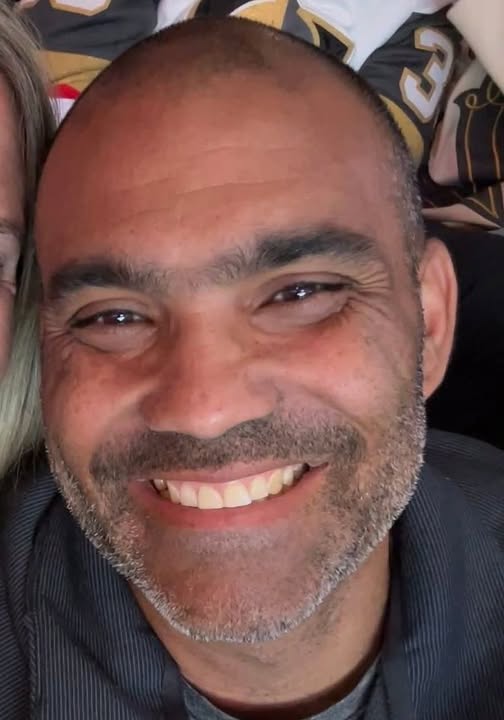
Paul Blanchard Obituary from Northborough-The recent news surrounding the Paul Blanchard obituary from his Northborough, MA death has sent a profound ripple of sadness through both the quiet streets of Worcester County and the bustling corridors of the national legal community. When we lose someone who not only shaped the way we understand the law but also dedicated his life to uplifting his hometown, the loss feels intensely personal. Paul Blanchard was a man of incredible duality. On one hand, he was a giant in legal circles, a scholar and commentator whose sharp analyses of the most complex, high-profile trials of our generation cut through the noise of modern media. On the other, he was a quintessential New Englander, a devoted family man, and a pillar of the Northborough community who always found time to mentor a struggling student or offer pro bono advice to a neighbor in need.
We often think of legal commentators and brilliant juridical minds as distant figures, cloistered away in ivory towers or shouting from cable news boxes. Paul shattered that stereotype completely. He believed that the law belonged to the people, not just the elite. His sudden passing leaves a void that will be nearly impossible to fill. In this comprehensive tribute, we are going completely beyond the standard death notice. We are going to explore the incredible breadth of his life. We will delve into his formative years in Massachusetts, meticulously unpack the deep legal philosophy he championed, analyze his brilliant commentary on defining cultural moments like the Harvey Weinstein and Rudy Giuliani cases, and celebrate the enduring, localized legacy he leaves behind in Northborough. This is the story of a man who defended the sanctity of due process when it was unpopular and loved his community fiercely until the very end.
The Heart of Northborough: Early Life and Formative Years
Every great thinker has an origin story, a set of geographical and cultural roots that anchor their worldview. For Paul Blanchard, that anchor was Central Massachusetts. The values instilled in him during his early years were not the cutthroat, win-at-all-costs mentalities you often find in corporate law. Instead, they were the hardworking, salt-of-the-earth principles that define the historic towns of New England.
Growing Up in Central Massachusetts
Northborough is the kind of town where people actually know their neighbors. It is a place characterized by historic colonial homes, sprawling apple orchards, and a deep-seated respect for community involvement. Growing up here, Paul was surrounded by a microcosm of American civic duty. His childhood was spent navigating the changing seasons of Worcester County, from the vibrant, crisp autumns that paint the town in reds and golds, to the harsh, character-building winters that require neighbors to dig each other out of snowbanks.
This environment profoundly shaped his understanding of fairness and equity. As a young boy, Paul was known for his insatiable curiosity. He was the kid who didn’t just accept a rule; he wanted to know exactly why the rule existed, who wrote it, and whether it was being applied equally to everyone. Teachers in the Northborough public school system frequently noted his debate skills, long before he ever stepped foot into a law school. He possessed a rare combination of intense intellectual rigor and genuine, warm empathy. He could argue a point relentlessly, but he never made his opponent feel small. This unique trait—the ability to detach personal ego from the pursuit of truth—became the ultimate hallmark of his entire career.
The Foundation of a Relentless Work Ethic
You don’t reach the upper echelons of legal scholarship without a work ethic that borders on the obsessive. Paul’s parents instilled in him the belief that talent is simply a starting line; hard work is the vehicle that actually crosses the finish line. During his teenage years, he worked various odd jobs around Northborough, learning the value of a dollar and the importance of keeping one’s word. Whether he was organizing community drives or studying late into the night at the local library, he approached every single task with a meticulous attention to detail.
This tireless drive carried him through his rigorous undergraduate studies and straight into law school, where he quickly distinguished himself not just as a student who could memorize case law, but as a visionary who could see the sociological impacts of legal rulings. He didn’t just read the law; he interrogated it. He wanted to understand the human elements behind the rigid statutes. Why do people commit crimes? How does the state balance its massive power against the fragile rights of an individual? These weren’t abstract academic exercises for Paul; they were urgent, life-or-death questions. And his relentless pursuit of the answers started right there in the quiet, supportive embrace of Northborough.
Forging a Legal Philosophy: Due Process in the Court of Public Opinion
To truly understand the weight of Paul Blanchard’s legacy, we have to take a deep dive into the legal philosophy he spent decades cultivating. We live in an era of instant gratification and instant outrage. Social media acts as an accelerator for public opinion, often functioning as a digital guillotine before a defendant ever sees the inside of a courtroom. Paul stood firmly against this modern tide. His philosophy was anchored in the bedrock of the United States Constitution, specifically the Fifth and Fourteenth Amendments.
The Core Tenets of His Jurisprudence
Paul’s legal worldview can be summarized in a single, unwavering principle: the integrity of the process is infinitely more important than the popularity of the outcome. He firmly believed that if we bend the rules of due process to secure a conviction against a universally despised defendant, we irreparably fracture the system for everyone else. It is easy to demand fair trials for the innocent, the sympathetic, and the righteous. It is incredibly difficult, and deeply unpopular, to demand those exact same protections for the accused, the vilified, and the guilty.
He frequently wrote and spoke about the dangerous erosion of the presumption of innocence. In his view, the modern 24-hour news cycle had created a parallel justice system—one governed by ratings, clicks, and emotional manipulation rather than evidence, cross-examination, and reasonable doubt. He argued that prosecutors were increasingly playing to the cameras rather than the jury box, a trend he viewed as an existential threat to American jurisprudence.
Balancing Constitutional Rights with Societal Outrage
One of the most fascinating aspects of Paul’s mind was his ability to hold two competing truths simultaneously. He possessed a deep, profound empathy for victims of systemic abuse and crime. He understood the righteous anger of marginalized groups who had been ignored by the justice system for decades. Yet, he absolutely refused to compromise on the constitutional rights of the accused to appease that anger.
He was a staunch defender of rigorous evidentiary standards. If the state wants to take away a person’s liberty, he argued, they must meet the highest possible burden of proof, without relying on character assassination or emotional prejudice. He often cited the phrase, “Hard cases make bad law.” When society is faced with a heinous crime that shocks the conscience, the immediate impulse is to lower the bar for conviction just to ensure the monster goes away. Paul was the voice in the room reminding us that the bar we lower today is the same bar that will be used to judge a falsely accused citizen tomorrow. His unwavering commitment to this principle made him a highly sought-after voice when the nation’s most controversial cases hit the headlines.
Deep Dive: Analyzing the Harvey Weinstein Trial Through Blanchard’s Lens
There is perhaps no greater modern example of the collision between societal outrage and legal due process than the criminal trials of Harvey Weinstein. The Weinstein case was the undisputed catalyst for the global #MeToo movement, an incredibly necessary cultural reckoning that exposed decades of systemic sexual abuse and power imbalances in the entertainment industry and beyond. But from a purely legal perspective, the trial was an absolute minefield of complex evidentiary issues. Paul Blanchard’s commentary on this case remains some of the most insightful, objective, and legally sound analysis of the decade.
The Molineux Rule and Evidentiary Boundaries
To understand Paul’s critique, we have to look at a highly specific legal concept known in New York as the Molineux rule (and federally as Rule 404(b)). In simplest terms, this rule dictates that a prosecutor cannot introduce evidence of a defendant’s prior, uncharged bad acts just to prove that the defendant has a bad character and a propensity to commit crimes. You must be tried for the specific crimes listed in the indictment, not for being a generally terrible person.
During the Weinstein trial in New York, the judge allowed several “prior bad acts” witnesses to testify. These were women whose allegations were not part of the actual criminal charges. The prosecution argued they were necessary to show intent and a pattern of behavior. Paul Blanchard immediately raised the alarm. He argued that while these testimonies were undeniably powerful and emotionally devastating, their sheer volume threatened to overwhelm the jury. He posited that the jury might convict Weinstein not because the state proved the specific indicted charges beyond a reasonable doubt, but simply because the “prior bad acts” witnesses proved he was a predator.
Paul was not defending Weinstein the man; he was defending the boundaries of the law. He explained that if prosecutors are allowed to parade uncharged allegations in front of a jury to secure a conviction, the presumption of innocence is effectively dead. How can a defendant mount a fair defense when he is suddenly forced to defend his entire life history rather than the specific charges at hand?
The Intersection of the #MeToo Movement and Legal Strategy
Paul’s analysis went beyond the courtroom mechanics; he explored the sociological weight of the trial. The #MeToo movement had created an environment where the phrase “believe all women” became a cultural rallying cry. Paul deeply respected the movement’s goal of dismantling predatory power structures. However, he was quick to point out that “believe all women” is a social imperative, not a legal standard.
In a court of law, the standard must remain “presumed innocent until proven guilty beyond a reasonable doubt.” Paul wrote extensively about the immense, almost crushing pressure placed on the judge and the appellate courts in the Weinstein case. The public demand for a conviction was deafening. Paul hypothesized that this intense public pressure could subconsciously influence judicial rulings on evidentiary matters. He warned that using the courtroom to solve macro-level societal problems inevitably leads to the micro-level trampling of individual constitutional rights.
Blanchard’s Commentary on Appellate Reversals
Paul’s warnings proved to be incredibly prescient. Years later, the New York Court of Appeals overturned Harvey Weinstein’s 2020 rape conviction in a highly controversial 4-3 decision. The appellate court’s reasoning perfectly mirrored Paul’s earlier commentary: the trial judge had erred by admitting too much testimony about uncharged, prior bad acts, thereby prejudicing the jury.
When this reversal happened, the public outcry was massive. Many viewed it as a catastrophic step backward for victims’ rights. But Paul remained the steady voice of legal reason. He patiently explained to the public that the reversal was not an exoneration of Weinstein, nor was it a dismissal of the victims’ pain. Instead, it was a necessary, albeit painful, course correction by the judicial system to uphold the strict rules of evidence. He argued that the appellate decision was actually a triumph for the rule of law, proving that even the most despised defendants in the world are entitled to a fair trial free from prejudicial evidence. His ability to strip the emotion away and explain the vital importance of procedural fairness is precisely why his loss is felt so deeply today.
Navigating Political Quagmires: The Rudy Giuliani Saga
If the Weinstein case was a masterclass in the boundaries of criminal evidence, the tragic legal downfall of Rudy Giuliani provided Paul Blanchard with a canvas to explore the absolute limits of the First Amendment, defamation, and the ethical duties of an officer of the court. Giuliani, once universally revered as “America’s Mayor” following the September 11 attacks, saw his legacy completely dismantle as he became the architect of the deeply flawed legal strategy to overturn the 2020 presidential election.
Defamation vs. The First Amendment
Paul was fascinated by the legal mechanics of the Giuliani saga, particularly the devastating defamation lawsuit brought by Georgia election workers Ruby Freeman and Shaye Moss. Giuliani had repeatedly and falsely accused the two women of election fraud, leading to severe harassment and death threats against them. When they sued him for defamation, Giuliani initially tried to hide behind the shield of the First Amendment, claiming his statements were protected political speech.
Paul expertly dissected this defense for the public. He broke down the legal concept of “defamation per se,” explaining that the First Amendment is not an absolute, impenetrable shield. While political speech is granted the highest level of protection in the United States, that protection evaporates the moment a person knowingly spreads demonstrably false, destructive lies about a private citizen. Paul detailed how Giuliani’s strategy of ignoring discovery requests and refusing to turn over evidence in the civil suit was not just a blunder, but a deliberate, desperate stalling tactic. When the judge ultimately hit Giuliani with a default judgment—leading to a staggering $148 million verdict—Paul utilized the moment as a powerful teaching tool. He explained that in the civil justice system, actions (or in this case, inactions) have immediate, catastrophic consequences, regardless of a person’s political status.
The Erosion of Legal Ethics and Disciplinary Proceedings
Beyond the financial ruin, Paul was deeply troubled by the ethical implications of Giuliani’s conduct. An attorney’s license is a privilege, not a right. It comes with a strict fiduciary duty to the truth and to the courts. Paul closely monitored the disciplinary proceedings against Giuliani in New York and Washington, D.C.
When a New York appellate court suspended Giuliani’s law license, citing his “demonstrably false and misleading” statements to the public and the courts, Paul wrote a sweeping analysis on the fragility of legal ethics. He pointed out that Giuliani hadn’t just lied on a cable news show; he had signed his name to frivolous lawsuits and presented baseless claims to federal judges. Paul explained that the legal system relies entirely on the basic honesty of its practitioners. If attorneys are allowed to weaponize the courts with fabricated evidence to achieve a political goal, the entire foundation of the judicial branch collapses.
Blanchard’s Warnings on the Politicization of the Bar
For Paul, the Giuliani saga was a glaring red warning light for the American legal profession. He saw a growing, dangerous trend where attorneys were prioritizing their loyalty to a political figure or movement over their oath to the Constitution. He argued passionately that a lawyer’s ultimate loyalty must always be to the rule of law.
He used Giuliani’s bankruptcy and professional disgrace as a cautionary tale. He spoke to law students and young attorneys, reminding them that political power is fleeting, but a lawyer’s reputation for integrity is permanent. Once you sell out your ethical obligations for short-term political gain, you can never buy them back. Paul’s clear-eyed, non-partisan analysis of the situation helped the public understand that Giuliani’s downfall was not a political witch hunt, but rather the necessary, mechanical functioning of a legal system expelling bad faith actors to protect its own integrity.
Media Presence: A Voice of Reason in Legal Storms
While Paul’s intellect could easily have kept him confined to writing dense legal treatises that only other lawyers would read, he felt a profound, democratic duty to share his knowledge with the general public. He believed that an uninformed populace is easily manipulated by political and media spin. As a result, Paul cultivated a commanding, yet deeply accessible, media presence.
Translating Legalese for the Masses
The law is fundamentally built on a language of its own—”legalese”—which often acts as a gatekeeping mechanism, keeping average citizens in the dark about their own rights and the workings of their government. Paul was a master translator. Whether he was appearing on national television segments, contributing long-form op-eds to major publications, or speaking on top-tier legal podcasts, his primary goal was always clarity.
He had a remarkable gift for taking the most convoluted, impenetrable legal concepts—like the nuances of habeas corpus, the intricacies of the hearsay rule, or the dense mechanics of appellate procedure—and explaining them using everyday analogies. He didn’t dumb the law down; he opened it up. When a major verdict broke, television producers knew they could rely on Paul to provide an analysis that was entirely stripped of hyperbole. While other pundits were screaming over each other to score partisan points, Paul was the calm, measured voice in the center of the storm, patiently explaining what the jury instructions actually meant and why the judge made a specific ruling.
The Responsibility of Legal Punditry
Paul took the responsibility of public commentary incredibly seriously. He frequently criticized the rise of “infotainment” within the legal news sphere. He argued that when attorneys go on television and offer wildly speculative opinions or pander to a specific political base, they actively degrade the public’s trust in the justice system.
Before every interview, Paul would meticulously read the actual court filings. He refused to comment on a motion he hadn’t personally reviewed. This level of preparation gave his voice a rare authority. Viewers trusted him because they knew he had zero hidden agendas. He wasn’t trying to audition for a political appointment or secure a book deal; he was simply a teacher trying to ensure that the American public actually understood the mechanics of their own democracy. His departure from the media landscape leaves a profound silence, a loss of the calm, objective wisdom we so desperately need in these deeply polarized times.
Community Impact: Paul Blanchard’s Enduring Legacy in Northborough
While Paul’s mind often wrestled with national, macro-level legal crises, his heart never left Northborough, Massachusetts. It is incredibly rare to find a figure of his intellectual stature who remained so deeply embedded in the fabric of his local hometown. The Paul Blanchard obituary from Northborough, MA death details will list his professional accolades, but the true measure of his life is found in the countless, quiet acts of service he performed in his own community.
Pro Bono Initiatives and Local Mentorship
Paul firmly believed that the privilege of a legal education came with a strict moral obligation to serve those who could not afford representation. Despite his demanding schedule, he consistently dedicated a significant portion of his time to pro bono work right in Worcester County. He helped local families navigate the terrifying complexities of housing court, assisted elderly residents with estate planning, and provided free legal counsel to small, local businesses trying to get off the ground.
But perhaps his most profound local impact was his dedication to mentorship. Paul was a fixture at local high schools and community colleges. He loved nothing more than sitting down with a group of young, aspiring students who were curious about the law. He didn’t just give them generic career advice; he challenged them. He set up mock debates, reviewed their college application essays, and helped them secure internships. Many young attorneys practicing in Massachusetts today can trace the trajectory of their careers back to a quiet, encouraging conversation they had over coffee with Paul Blanchard in a Northborough diner.
Shaping the Next Generation of Thinkers
Paul’s philanthropic efforts extended far beyond the law. He was deeply invested in the civic health of Northborough. He served on local advisory boards, supported the public library, and was a generous benefactor to local youth sports and arts programs. He understood that a healthy, vibrant community is the ultimate safeguard against the kind of societal breakdowns he studied in his legal work.
He was famously known for his weekend walks through the trails of Central Massachusetts, often stopping to chat with neighbors about everything from local town hall politics to the Red Sox. To the national media, he was “Paul Blanchard, esteemed legal analyst.” But to the people of Northborough, he was simply Paul—a neighbor you could count on in a crisis, a man who possessed a brilliant mind but absolutely no pretension. His legacy in Northborough isn’t just a plaque or a memory; it is woven directly into the lives of the people he helped, the students he inspired, and the community he loved so deeply.
Memorial Services and Obituary Details
The passing of Paul Blanchard is a monumental loss, but his family, friends, and the town of Northborough are choosing to focus on the incredible life he lived. The finality of the Paul Blanchard obituary from Northborough, MA death announcements serves as a moment to gather, reflect, and celebrate a legacy of integrity, brilliance, and unparalleled kindness.
Surviving Family and Northborough Roots
Paul is survived by his beloved wife, whose unwavering support was the bedrock of his incredibly demanding career, and his deeply cherished children, who inherited his quick wit, deep empathy, and intellectual curiosity. He also leaves behind a large, extended network of siblings, nieces, nephews, and countless friends across Massachusetts and beyond. His family was his ultimate sanctuary. No matter how intense the national legal news cycle became, Paul always prioritized returning home to the quiet, grounding reality of his family life in Northborough. He often joked that his family was his best “jury,” keeping his ego in check and reminding him of what truly mattered in the world.
Service Information and Charitable Donations
The community is invited to pay their final respects and celebrate Paul’s remarkable journey. Visiting hours will be held at the prominent local funeral home in the heart of Worcester County, where friends, colleagues, and neighbors can share stories of his impact. A memorial service celebrating his life, his contributions to the legal field, and his devotion to his hometown will follow.
In true accordance with Paul’s lifelong commitment to education and justice, the Blanchard family has requested that, in lieu of flowers, charitable donations be made in his honor. Funds are being directed toward local Northborough educational initiatives and national organizations dedicated to providing pro bono legal defense for the indigent. By supporting these causes, we ensure that Paul’s relentless pursuit of fairness and his love for his community continue to thrive long after his passing.
Frequently Asked Questions (FAQ)
What was Paul Blanchard of Northborough, MA known for? Paul Blanchard was renowned for his brilliant legal mind, his deep-dive commentary on high-profile national cases, and his unwavering commitment to his local community in Northborough, Massachusetts. He was a trusted media voice who explained complex legal theories to the public, particularly focusing on the vital importance of due process, constitutional rights, and the presumption of innocence.
Where will the funeral services for Paul Blanchard be held? Memorial services and calling hours are being held locally in the Worcester County area, specifically catering to his deep roots in Northborough, MA. Detailed times and specific locations are provided through the family’s official obituary releases and local funeral home directories to ensure the community can gather to pay their respects.
Did Paul Blanchard practice law in high-profile cases like Harvey Weinstein or Rudy Giuliani? While he did not serve as the trial attorney of record for these specific individuals, Paul was one of the nation’s foremost legal analysts and scholars regarding these cases. He provided extensive, highly regarded public commentary on the evidentiary rules in the Weinstein trial and the ethical and constitutional boundaries tested in the Giuliani defamation lawsuits. His analyses are considered vital educational tools for understanding modern jurisprudence.
How did Paul Blanchard contribute to the Northborough community? Paul was an absolute pillar of the Northborough community. He dedicated countless hours to pro bono legal work for local residents, served as a passionate mentor for youth and aspiring law students, supported local civic boards, and was a generous benefactor to regional educational and community programs.
Where can I send donations in memory of Paul Blanchard? In lieu of flowers, the family has requested that donations be directed to local Northborough educational funds and organizations that provide pro bono legal services to underrepresented individuals. This honors his lifelong dedication to learning and the equitable application of the law.
What was Paul Blanchard’s core legal philosophy? His core philosophy centered entirely on the strict preservation of due process and the presumption of innocence. He argued fiercely that constitutional rights must be applied equally to everyone, regardless of public opinion or societal outrage, warning that compromising the rules for a despised defendant ultimately threatens the liberty of all citizens.
How did he view the intersection of media and the law? Paul was highly critical of the 24-hour news cycle’s tendency to create a “court of public opinion” that pre-judges defendants before trial. However, he used his own media presence to counter this trend, acting as a translator who stripped away political spin and hyperbole to explain the actual mechanics and realities of the legal system to the general public.
The legacy of Paul Blanchard is not merely a chapter in the history of Northborough, MA; it is a lasting testament to the power of a principled life. He showed us that you can possess a towering, world-class intellect while maintaining the humble, grounded soul of a community servant. As we mourn his passing, we also celebrate the indelible mark he left on the law, on his students, and on every life he touched in Central Massachusetts.