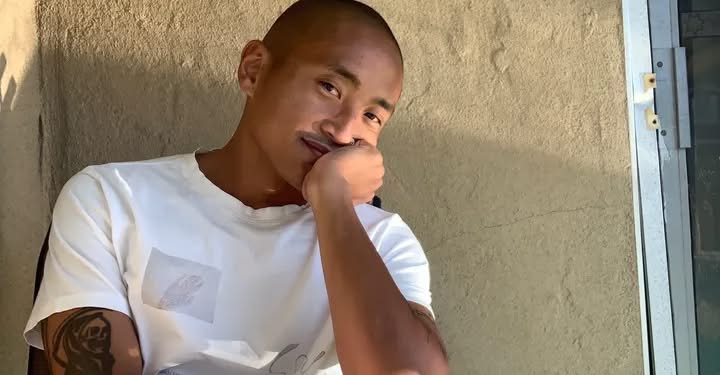
Daniel Mayo Obituary and Death-When the news broke regarding the Daniel Mayo obituary and death, a collective gasp echoed through the marble hallways of courthouses across the country. We lost a man who was, by all accounts, a towering figure in the world of high-stakes litigation. If you have ever flipped on a cable news network during a major celebrity trial or a political scandal, chances are you have seen Daniel Mayo. He was the bulldog in the bespoke suit, the brilliant legal strategist who took on cases that other attorneys would not touch with a ten-foot pole. His passing marks the end of an era in American jurisprudence, leaving behind a legacy that is as complex as it is undeniably impactful.
The death of Daniel Mayo is not just the loss of a brilliant attorney; it is the loss of a legal philosopher who fundamentally understood the theatrical, adversarial, and deeply human nature of the justice system. For decades, he stood at the intersection of public outrage and constitutional rights. He was vilified by some, idolized by others, and deeply respected by anyone who ever had the daunting task of facing him in a courtroom. To fully understand the magnitude of his loss, we have to look far beyond the sensational headlines. We have to examine the man, the mind, the media masterclass he put on daily, and the profound legal precedents he leaves in his wake.
This comprehensive look into his life serves as both a tribute and a deep dive into what made him such a formidable force. We are going to explore his early beginnings, unpack his controversial but brilliant legal philosophy, analyze his pivotal roles in the cases of Harvey Weinstein and Rudy Giuliani, and look at the quiet, philanthropic side of him that the cameras rarely captured.
Early Life and the Journey into the Legal Profession
You might think that a man who represented billionaires, Hollywood moguls, and powerful politicians was born with a silver spoon in his mouth, destined for the Ivy League and corporate boardrooms. That could not be further from the truth. Daniel Mayo’s story is one of grit, relentless ambition, and a deeply ingrained sense of argument that started long before he ever passed the bar exam.
Growing up in a working-class neighborhood, Mayo was exposed early on to the harsh realities of the justice system. He saw firsthand how the law could be used as both a shield and a sword, depending entirely on who was wielding it. His parents, hardworking folks who believed in the power of education, instilled in him a voracious appetite for reading. He did not just read novels; he read biographies of great historical figures, devouring the stories of Clarence Darrow, Thurgood Marshall, and John Adams. He was fascinated by the idea that one person, armed with nothing but the law and their own intellect, could stand against the full weight and resources of the government.
His journey through undergraduate studies and eventually law school was marked by a fierce independence. He was the student who would argue with the professors, not out of disrespect, but out of a genuine desire to stress-test every legal theory presented to him. He was known for staying in the law library until the lights were shut off, poring over old case files and appellate decisions, looking for the tiny loopholes and nuanced interpretations that others missed.
When he finally passed the bar and took his first steps into a courtroom, he did not start by defending the rich and famous. He started in the trenches. He took on public defender overflow cases, representing individuals who had no money, no hope, and no one else to turn to. It was in these gritty, poorly lit municipal courtrooms that Daniel Mayo honed his craft. He learned how to read a jury, how to dismantle a weak prosecution witness, and most importantly, how to humanize a defendant that society had already cast aside. Those early years forged the armor he would later wear in the most highly publicized trials of the century. He learned that the law is not just what is written in the statutes; it is a living, breathing entity that bends to the most compelling narrative.
The Legal Philosophy of Daniel Mayo: Defending the Indefensible
To understand the man, you have to understand the philosophy that drove him. Whenever the Daniel Mayo obituary and death are discussed in legal circles, the conversation inevitably turns to his unwavering commitment to the Sixth Amendment. He was often asked by reporters how he could sleep at night defending people accused of horrific crimes or massive public betrayals. His answer was always the same, delivered with a calm, piercing intensity: “I don’t defend the crime. I defend the Constitution.”
The Core Tenets of His Defense Strategy
Daniel Mayo believed that the justice system is only as strong as its defense of its most reviled citizens. He argued that if the state can easily trample the rights of a pariah, it is only a matter of time before it tramples the rights of the ordinary citizen. This was not just a convenient talking point for him; it was the bedrock of his entire legal strategy.
His approach to defense was meticulous and multi-layered. First, he believed in the absolute presumption of innocence, a concept he felt the modern media cycle had completely obliterated. In his view, a trial did not start in the courtroom; it started the moment the allegations were made public. Therefore, his strategy always involved a dual-track approach: fighting the legal battle in the courtroom and fighting the narrative battle in the court of public opinion.
In the courtroom, Mayo was a master of reasonable doubt. He didn’t need to prove his clients were saints. He just needed to prove that the state’s narrative was flawed, incomplete, or biased. He would isolate individual pieces of evidence and attack their chain of custody, the methodology used to obtain them, or the credibility of the person presenting them. He was famous for his grueling cross-examinations, which were never loud or theatrical, but rather surgical. He would lead a witness down a comfortable path, getting them to agree to a series of seemingly harmless statements, before springing a trap that exposed inconsistencies in their testimony.
Balancing Ethics, Public Opinion, and Constitutional Rights
The ethical tightrope that Daniel Mayo walked every day was incredibly thin. He represented clients who brought immense public vitriol to his doorstep. Protesters often lined the sidewalks outside his office, and he received countless threats over his long career. Yet, he never wavered.
He often lectured at law schools about the ethical duty of a defense attorney. He taught that personal disgust has no place in the attorney-client relationship. Once you take the case, you are the ultimate advocate. You are the only person standing between your client and the formidable, often crushing machinery of the state. Mayo argued that true ethical practice in defense law means pushing the government to prove every single element of their case beyond a reasonable doubt, without exception.
He was deeply critical of the modern trend where individuals are convicted in the court of public opinion via social media before a jury is even empaneled. He saw this as the greatest modern threat to the constitutional right to a fair trial. His philosophy was a throwback to a more traditional interpretation of the law, where the burden of proof rests entirely on the accuser, and the accused owes the public absolutely nothing.
High-Profile Battles: The Notable Cases That Defined His Career
You cannot write about the Daniel Mayo obituary and death without dedicating significant time to the monumental cases that defined his career. He was the go-to attorney when everything was on the line, when a person’s entire legacy, freedom, and fortune were at stake. While he handled hundreds of cases throughout his life, his involvement in the representations of Harvey Weinstein and Rudy Giuliani catapulted him into a totally different stratosphere of public recognition.
The Harvey Weinstein Defense: Navigating the Courtroom in the #MeToo Era
When Daniel Mayo joined the defense team for Harvey Weinstein, he was walking into a legal hurricane. The #MeToo movement had fundamentally shifted the cultural landscape, and Weinstein was the undisputed face of the reckoning. The public had made up its mind, and the media coverage was a relentless drumbeat of condemnation.
Mayo’s role in this case was a masterclass in separating emotion from evidence. He understood that he could not fight the broader cultural movement—nor did he want to. His goal was to narrow the focus of the trial down to the specific legal statutes and the specific evidentiary rules of the jurisdiction.
One of the most complex hurdles Mayo navigated during the Weinstein saga was the prosecution’s use of prior bad acts witnesses. The prosecution sought to introduce testimony from women whose allegations were not part of the actual criminal charges, a tactic used to establish a pattern of behavior. Mayo fought these inclusions tooth and nail in pre-trial motions. He argued brilliantly, though facing an uphill battle, that introducing uncharged conduct would prejudice the jury so severely that a fair trial would be impossible. He filed exhaustive briefs detailing decades of appellate precedent, arguing that a defendant must be tried for the crimes charged, not for being an unpopular or immoral person.
During jury selection, Mayo’s psychological acumen was on full display. He didn’t look for jurors who were ignorant of the news; he knew that was impossible. Instead, he looked for jurors who demonstrated an independent streak, individuals who showed a historical willingness to go against the grain of popular consensus. In his opening statements and cross-examinations, he meticulously dissected the communications between Weinstein and his accusers after the alleged incidents. He wasn’t trying to shame the witnesses; rather, he was forcing the jury to grapple with the incredibly murky, complex realities of human relationships and the high legal bar required for a criminal conviction. It was a polarizing defense, but it was executed with a level of legal precision that even his harshest critics had to acknowledge.
The Rudy Giuliani Representation: Politics, Media, and Complex Law
If the Weinstein case was a battle over cultural shifts, the representation of Rudy Giuliani was a plunge into the chaotic intersection of politics, media, and the law. Defending the former Mayor of New York and personal attorney to a sitting president presented an entirely different set of challenges. This was not a standard criminal defense; this was a sprawling, multi-jurisdictional defense involving defamation claims, election law, congressional subpoenas, and intense partisan scrutiny.
Daniel Mayo’s genius in the Giuliani matters was his ability to compartmentalize. The allegations against Giuliani were vast, ranging from his involvement in efforts to overturn election results to defamation lawsuits brought by election workers. The media environment surrounding these cases was incredibly toxic, with new leaks and allegations dropping daily.
Mayo’s strategy was rooted in First Amendment protections and the complex privileges associated with the attorney-client relationship. When defending Giuliani against defamation claims, Mayo leaned heavily on the legal standards required to prove actual malice for public figures. He argued that Giuliani, acting in his capacity as a legal advocate and political surrogate, was engaging in protected political speech. He crafted arguments that challenged the very definition of actionable defamation in an era where political hyperbole is the standard language of the public square.
Furthermore, Mayo had to manage a client who was inherently a public figure, someone who was used to controlling the narrative through television appearances and press conferences. Managing Giuliani required as much political savvy as it did legal knowledge. Mayo had to advise his client on the legal perils of out-of-court statements while respecting Giuliani’s desire to defend himself publicly. It was a delicate dance of mitigating legal exposure without silencing a historically vocal figure. Mayo’s extensive filings regarding executive privilege and the protections afforded to attorneys advising political campaigns will likely be studied in law schools for generations as a prime example of law operating at the highest levels of government.
Landmark Precedents and Appellate Victories
Beyond Weinstein and Giuliani, Daniel Mayo’s career is littered with landmark appellate victories that actually changed the way the law is applied. He took on massive corporate fraud cases where he defended executives accused of white-collar crimes. In one notable case involving a Fortune 500 CEO, Mayo successfully argued before the appellate court that the prosecution had overreached in its interpretation of insider trading statutes, resulting in a ruling that forced the government to establish a much clearer standard of intent in future financial prosecutions.
He was also deeply involved in challenging the boundaries of digital privacy. Long before it was a mainstream issue, Mayo was fighting in court to protect clients from unwarranted government surveillance of their digital communications. He argued that the Fourth Amendment must evolve to protect data stored on servers just as it protects physical documents stored in a filing cabinet. His arguments laid the groundwork for significant legal precedents protecting the privacy of citizens in the digital age.
Daniel Mayo’s Media Presence and Public Perception
Daniel Mayo understood something that many brilliant lawyers never grasp: in high-profile cases, the verdict in the courtroom is only half the battle. The verdict in the court of public opinion can destroy a client’s life just as thoroughly as a prison sentence. Because of this, his media presence was just as calculated and strategic as his cross-examinations.
Mastering the Court of Public Opinion
When Mayo stepped up to a bank of microphones outside a courthouse, he owned the space. He didn’t yell, he didn’t rant, and he rarely showed frustration. Instead, he projected an aura of absolute calm and unwavering confidence. He knew exactly what the evening news needed: a soundbite that was articulate, memorable, and framed the daily court proceedings entirely in his client’s favor.
He was a master of the “spin room.” If the prosecution had a good day in court, Mayo would step outside and completely reframe the narrative. He would point out the one tiny inconsistency in the star witness’s testimony and magnify it until it seemed like the entire state’s case was crumbling. He had an incredible ability to take complex, convoluted legal arguments and distill them into simple, powerful metaphors that the average person watching at home could easily understand.
He cultivated relationships with journalists. He understood that reporters needed access and insight, and he was willing to provide it—on his terms. He would often speak off the record to provide background context, ensuring that the media understood the legal nuances of his defense strategy. This wasn’t manipulation; it was brilliant advocacy. He knew that an educated press corps was less likely to parrot the prosecution’s talking points blindly.
The Persona Behind the Briefs
Despite his aggressive tactics and his defense of highly unpopular figures, those who knew him well described a man very different from his public persona. The public saw a ruthless shark; his colleagues saw a deeply intellectual, surprisingly funny, and intensely loyal friend.
He was known for his self-deprecating humor. He fully understood how he was perceived by the general public and often joked about his status as the “devil’s advocate.” But beneath the sharp suits and the quick wit was a man who felt the heavy burden of his profession. He carried the weight of his clients’ lives on his shoulders, a stress that few can comprehend. Colleagues noted that during major trials, he barely slept, surviving on black coffee and sheer adrenaline. The duality of Daniel Mayo—the public warrior and the private intellectual—made him an endlessly fascinating figure in the legal community.
The Impact on the Legal Community and Beyond
While the Daniel Mayo obituary and death notices focus on his famous clients, his true legacy might actually lie in the quiet impact he had on the legal community behind closed doors. He was not just a practitioner of the law; he was a steward of the profession.
Mentorship and Shaping the Next Generation of Attorneys
Mayo was legendary for his mentorship. He didn’t just hire young associates to do his research; he actively trained them to be trial lawyers. He would run grueling moot court sessions in his firm’s conference room, playing the role of a hostile judge or a difficult witness, forcing his young attorneys to think on their feet and defend their arguments under intense pressure.
He taught them that preparation is the only substitute for genius. He demanded perfection in their legal research and writing, but more importantly, he taught them how to stand their ground. “A jury can smell fear,” he used to tell his associates. “If you don’t believe in your argument with every fiber of your being, they won’t believe it either.” Today, there are dozens of highly successful defense attorneys practicing across the country who credit their entire careers to the lessons they learned working under Daniel Mayo. They carry his philosophy forward, ensuring that his approach to the law will survive long after his passing.
Philanthropy, Pro Bono Work, and Community Engagement
What the cameras never saw was Mayo’s extensive philanthropic work. He firmly believed that the scales of justice were tilted heavily against the poor, and he used his considerable wealth and resources to try and balance them.
He funded a massive scholarship program at his alma mater, specifically designed to support law students from underprivileged backgrounds who committed to working in public defense for the first five years of their careers. He wanted to ensure that the brightest legal minds were not solely funneled into corporate law, but were out in the trenches defending those who needed it most.
Furthermore, his firm took on a significant number of pro bono cases every year. Mayo himself would often quietly take on the appeal of a wrongfully convicted individual who had exhausted all their resources. He poured the exact same energy, resources, and brilliance into defending a penniless inmate as he did defending a billionaire CEO. He never sought press for these cases. When asked about his pro bono work, he simply stated it was the “rent we pay for the privilege of practicing law.”
Circumstances Surrounding His Death and the Public Reaction
The news of the Daniel Mayo obituary and death came as a profound shock. Despite his demanding schedule, he had always appeared vigorous, an unstoppable force of nature in the courtroom.
Details of Daniel Mayo’s Passing
Daniel Mayo passed away peacefully at his home, surrounded by his immediate family. While he had been privately battling a prolonged illness, he kept his condition strictly confidential. He continued to work, consult, and advise his partners right up until his final weeks. He did not want his illness to become a distraction from the cases his firm was handling. His mind remained incredibly sharp until the very end, and he spent his final days ensuring that his clients’ defenses were securely in the hands of his trusted partners.
Tributes from Peers, Adversaries, and the Public
The reaction to his death was immediate and overwhelming. Social media, legal blogs, and mainstream news outlets were flooded with tributes. What was most striking about the reaction was the respect he garnered from his fiercest adversaries. Prominent prosecutors who had battled him in court for decades released statements praising his intellect, his integrity, and his fierce advocacy.
One former district attorney wrote, “Daniel Mayo was my greatest headache and my greatest teacher. He forced you to be better. If there was a single weak link in your case, he would find it and break it. The justice system is fundamentally weaker today without him keeping us all honest.”
Even commentators who vehemently disagreed with his choice of clients acknowledged his brilliance. He was recognized as a necessary pillar in the adversarial system—a reminder that justice requires a vigorous defense for everyone, regardless of public opinion.
Memorial Service and Lasting Legacy
The memorial service for Daniel Mayo was a reflection of the diverse and complex life he led. It was attended by a surreal mix of political figures, Hollywood elites, renowned judges, former clients, and the many young attorneys he had mentored over the years. The eulogies painted a picture of a man who loved his family deeply, loved the law fiercely, and possessed a work ethic that was entirely unmatched.
His legacy will not be defined by the guilt or innocence of the high-profile clients he represented. Instead, his legacy is etched into the very fabric of American jurisprudence. It is found in the appellate decisions that bear his name, the legal precedents he helped establish, and the constitutional rights he fought so fiercely to protect.
Daniel Mayo reminded us that the law is not a popularity contest. It is a grueling, adversarial search for the truth, governed by strict rules designed to protect the individual from the awesome power of the state. He took on the hardest cases, the most reviled clients, and the most impossible odds, and he did it with a brilliance and a tenacity that we may never see again. The Daniel Mayo obituary and death chapter is closed, but the echoes of his closing arguments will resonate in courtrooms for generations to come.
Frequently Asked Questions (FAQ) About Daniel Mayo’s Life and Death
Who was Daniel Mayo? Daniel Mayo was a highly prominent, nationally recognized criminal defense attorney and legal strategist. He was best known for his brilliant legal mind, his fierce commitment to the Sixth Amendment, and his willingness to take on extremely complex, high-profile cases. Throughout his career, he represented controversial figures, corporate executives, and individuals facing intense media scrutiny, earning a reputation as one of the most formidable defense attorneys of his generation.
What was the cause of Daniel Mayo’s death? Daniel Mayo passed away after a private, prolonged battle with a serious illness. True to his character, he kept his health struggles out of the public eye, continuing to work on complex legal strategies and advise his firm’s partners until shortly before his passing. He died peacefully at home, surrounded by his close family and loved ones.
How did Daniel Mayo impact high-profile legal defense? Mayo fundamentally changed how high-profile defense is conducted by integrating courtroom litigation with aggressive, strategic media management. He understood that in the modern era, defending a client in the court of public opinion is just as vital as defending them before a jury. His work in cases involving figures like Harvey Weinstein and Rudy Giuliani showcased his ability to navigate intense cultural and political pressures while keeping the focus strictly on constitutional rights and the burden of proof.
Where can I find Daniel Mayo’s official memorial details? Details regarding Daniel Mayo’s official memorial service and charitable donation requests were released by his family and his law firm. In lieu of flowers, the family requested that donations be made to the Daniel Mayo Legal Scholarship Fund, an initiative he founded to support underprivileged law students committed to careers in public defense.
The passing of Daniel Mayo is a monumental loss to the legal world. As we reflect on his life, his controversial cases, and his unyielding dedication to the Constitution, it becomes clear that his true legacy is the enduring strength of the adversarial system he so passionately championed.